Tune In
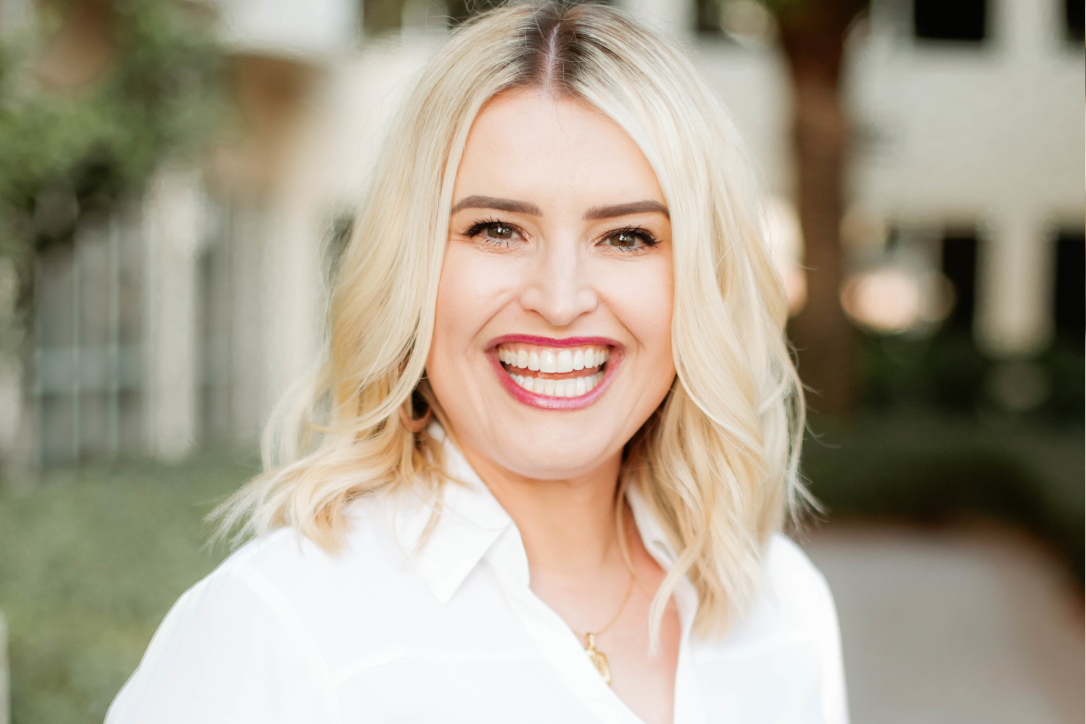
Have you ever wondered why a challenge appears right after you pray for your dreams? I’ve come to understand that these difficult moments are not a sign you are bad or wrong, but the very doorway your soul must walk through to grow. In this profound conversation with relationship expert Jessica Baum, we explore the neuroscience and spirituality of feeling truly safe—in your body, your nervous system, and your relationships. We discuss her book “Safe,” how to break cycles of anxious attachment, why your deepest suffering can be a portal to higher consciousness, and how to find the “anchor” relationships that allow for real healing.
Have questions about The Angel Membership or Angel Reiki School?
Book a free Discovery Call with Julie: https://calendly.com/juliejancius/discovery-call
Angel Reiki School (Online)
Starts the 1st of every month
Learn from anywhere: https://theangelmedium.com/get-certified
Book a 1-on-1 Angel Reading With Julie
Connect with your angels and loved ones in Heaven: https://theangelmedium.com/readings
Want a Free Reading?
We’re selecting 50+ volunteers for free readings at the in-person Angel Reiki School.
Leave a 5-star review of the podcast and copy/paste it here for a chance to win: https://theangelmedium.com/contact
Episode Highlights:
• Understanding how challenges are a divine response to your prayers for growth.
• A clear explanation of polyvagal theory and the three nervous system states.
• How to identify “anchor” people who have the capacity to hold space for your healing.
• The science behind why we repeat familiar, painful relationship patterns and how to stop.
Connect with Julie:
https://theangelmedium.com/ | https://www.instagram.com/angelpodcast/
TRANSCRIPT:
1117
[Julie Jancius] (0:00 – 14:57)
Hello friends, it’s Julie and I am recording just a special little intro here to this episode in New York City. I did the episode right before we took off the day that we left, actually, that you’re going to hear. And as I’ve reflected over the last week on this episode, I think I finally get it.
That when bad things happen, you are not bad or wrong. I don’t know why I grew up with that kind of concept stuck in my head as a child. But what I see in myself and in others is that when we sit and we pray, we ask God to show us the way to our dreams, you know, the callings and our heart, our purpose.
And then after we’re done praying, it’s often that a challenge appears. It presents itself. Right.
And it’s kind of like we go back to God. We’re like, Oh, God, no, no. I think you misinterpreted me here.
This is not what I asked you for. No, no, no. What I asked you for is, you know, and then name in there what you’re trying to manifest, right?
And you go, God, this isn’t what I prayed for. Can we try this again? And God says, I get it.
I see you. I hear you. I validate you.
And yet this is what you prayed for, because what you were praying for, what you’re asking for, what you’re trying to manifest is the end result. And God says to us, but you’ve got to go through the journey to get the result that you’ve asked for. You have to go through the journey and the journey that you’re on now in life, even if it’s challenging, it is the thing you have to go through, to grow through, to get where it is you want to be in life.
It is the challenge itself. And you’re not bad. You’re not wrong.
You’re not any low vibration. There isn’t anything wrong with you or bad about you because of where you’re at in life. It is just your soul’s journey.
I think about it like this. A person is not bad or wrong because they were born into poverty or because they were born with a disability, because they were maybe bullied in the workplace without provoking it. That happens.
Because you were taken advantage of, because your empathy or kindness, because your home caught fire, because you lost a loved one. You’re not bad or wrong in any way, shape or form, because you were betrayed by a close friend, a peer, a partner, because you were fired by a company when they’re really just trying to restructure and it had nothing to do at all with your performance. You’re not bad and you’re not wrong if you’re having a hard time getting pregnant, if you’ve been lied to, if you’ve been through identity theft.
Every single challenge you go through is the journey, a doorway to this deeper part of your soul. But you can’t go through a doorway that you don’t feel safe walking through. I think about a child who’s having a hard time sleeping at night and they just want the safety of their parents to be with them for a while as they fall asleep.
How many times have you and I been at doorways, challenges in our lives, and we’re holding on to the frame of the doorway? Like, God, I don’t want to go through this. God, no, bring me a different way.
And God’s like, but this is what you prayed for. You have to walk through that door. You have to walk down the yellow brick road, in a sense.
You have to walk the path to get to what it is that you’re trying to manifest. But when you don’t feel safe, your nervous system, what I feel is that your nervous system really starts surviving instead of growing. And when you’re really in this survival mode instead of a safety mode, your soul really isn’t fully showing up.
It’s really safety, us feeling safe, that child feeling safe because the parent is with them. And as an adult, a child feeling safe going to sleep because the parent is with them. It’s the same for adults.
We are always at these thresholds of journeys, going through something new. And we’re like kicking and screaming, holding on to the side. But when you realize that you have a friend, you have a partner who’s safe, you have people around you who remind you of that safety that truly is always there and always will be.
What that safety does is that safety allows compassion, compassion for ourselves, compassion for others who cause us pain. And compassion is what transforms really that pain within our hearts into wisdom. Safety opens up this channel for our intuition and our angelic guidance to come through where we’re not trying to avoid the situation any longer.
We’re not trying to not go through the doorway. We’re like, okay, all right. I see you, God.
I hear you, God. If this is what I want, this is the doorway that I have to walk through. This is the path that I have to walk.
Okay, how can I be the most safe within myself walking this path? And when you’ve really focused in on your own safety and security, it allows that growth to occur within you in a way in which the pain, the trauma, the wound doesn’t have to define you. Safety allows you to grow while keeping your entire being in a state of wholeness.
You are whole, you’re safe, you’re secure. And every challenge is in and of itself the passageway. Let me say that again.
Every challenge in and of itself is the passageway to your most strong, your most wise, and really your most awakened self. The reason that I wanted to bring you this intro is because you’re going to see that that’s where we walk you to in this episode. And I really struggled with this for years.
I really don’t love that this is the way that things are, but I accept that this is truth, divine truth. And I really have gotten to a point where I even embrace it. And I welcome the challenge because I know it’s going to awaken an even deeper heart within me.
Friends, just one more thing before we dive through because there’s no ads in today’s episodes. It’s just this special intro here, and then the full episode itself. If you are really wanting to work with your angels all year, I want you to join the membership.
The membership is there for every single person to know exactly which angels are working with them. We work with a new angel every single Wednesday evening. Friends, I created something that everybody likes to imitate and copy because it’s so good.
But I created this five years ago, and each year we’re building off of it. We’re growing. I’m teaching you new things.
You’re growing further. And if you want a supportive community, you want me to be your teacher, your guide, your mentor every single week, I would love to do that for you. That’s the angel membership.
You can also book a one-on-one reading with me. Right now, December, I’m doing 2026 forecasts readings. That could be just a regular, normal reading, or we could talk about everything that you need to know for the upcoming year.
If you go to the sessions or book a reading with me page on my website, you’ll find that. And friends, for those of you who really want to offer your services to the world, you want to step into the world as a healer yourself, you want to serve others and help others grow, you want to join the Angel Reiki School. It is not about Reiki, friends.
It is about teaching you mediumship, the energy, the language of the universe, which really helps you understand mediumship and how to be an angel messenger yourself. And friends, what I give you in here, because what I know, like I know, like I know, is this. Those who haven’t taught people, and I’ve been teaching you for 10 years how to do this work, those who haven’t taught others in the same way, those who haven’t walked the same path, they don’t know how to teach you how to get you where you need to be.
And when you come through the Angel Reiki School, what I teach you is how in a minimum, right, if you just want to work 21 hours a week, how to make over $10,000 a month. And that is not something that I could just say, hey, everybody who comes through the program makes that. It’s a lot of hard work.
You have to put in the hard work. You have to build a clientele. But if you want to learn how to build a highly successful spiritual business, and that’s just, right, the minimum that I want my clients making.
You could double that, you could triple that. Sky is the limit. It all depends on you.
It depends on how you develop your spiritual gifts. And really, it all starts with the Angel Reiki School where you’re learning how to develop all of your unique spiritual gifts as at once. All of this, the membership, the readings, the Angel Reiki School, it’s all over at juliejancis.com.
That’s J-U-L-I-E, like my last name, J-A-N as in Nancy, C as in cat, I as in igloo, U as in umbrella, S as in Sam, juliejancis.com. And you can find all of that over there. I love you so much, friends, and I hope you really, really enjoy today’s episode.
Hello, beautiful souls. Welcome back to the Angels and Awakening Podcast. I’m your host and author, Julie Jancis.
And friends, I feel like the angels have been prepping me in the background, waiting for the right person to have come on the podcast to share about this topic. And when I saw Jessica’s book pop up, I knew that we had to try and get her on the show. Jessica Baum has a new book that’s called Safe.
And if you’re a person who is an empath, you came into this life, here’s how the angels describe it. Some people come in with brown eyes, some people come in with blue eyes. You didn’t get to choose.
You just came in with the eye color that you have. And some people come in with just this warm, open heart, right? And they’re just open people, naturally, warm people, naturally, highly empathic.
Some people come into the world where they’re just a little bit more reserved, maybe a little bit more boundaried. One is not right and one is not wrong. But I will guess that those listening to this podcast, probably 99.9% of you are warm, open-hearted people who came into this world wanting to just share your earth angels. You want to share from your heart. You want to connect with other souls. And as you’ve gone through life and we’ve had different mini traumas, big traumas, it’s hard to feel safe with all people.
We run up against different situations where you start to question, can I even talk about this? Can I share openly about this? We start to, as empaths, hide ourselves a little bit more, reserve ourselves a little bit more.
And in a way, a lot of people call it dimming your own light, right? You’re not shining as bright as you could be because you’re worried in a way that you haven’t been safe in the past with all people. They’ve hurt you.
This isn’t just relationships with a partner. This is friends, this is colleagues, this is peers, even our kids. Maybe I haven’t experienced that with Elle, but I think there are all different relationships where we can make one another feel safe or we can make one another feel unsafe.
And there are little, probably pieces that Jessica is going to lead us through, which I would assume are repairable, are fixable. But then there’s bigger situations that come in in life where you’re like, geez, I’ve been through this over and over and over and over again. And I just can’t keep opening my heart.
I just can’t keep putting myself out there and just my heart getting smashed and crushed. It’s not a great way to live. And so we as spiritual people, the place that we’ve gotten to on this podcast, if you’ve listened to all the episodes in the past, is that you’re not wrong or bad for choosing to hold boundaries in your life, choosing to love yourself, choosing to prioritize your own safety and security in a relationship.
But it doesn’t mean that you’re not going to think about the person. It doesn’t mean that you’re not going to have memories pop up about the person. That doesn’t always mean that you’re supposed to go back to the relationship.
And so that’s kind of where I’m at with safe. I love, love, love my partnership with my husband. He is the best in the whole wide world.
I feel so safe in that relationship. But there’s other relationships, not so much. And so Jessica, this is a very long-winded intro, but can I just tell you how grateful I am to have you here today?
[Jessica Baum] (14:57 – 15:01)
I’m so grateful to be here and talking about this topic with you as well.
[Julie Jancius] (15:02 – 15:16)
If I could buy this book for every single person that listens to this podcast and make sure that it is on their bookshelf, I would. It’s amazing. And I hope you’re just so proud of this beautiful message that you’re putting out into the world.
[Jessica Baum] (15:17 – 15:31)
I am. I am really proud of it. And I really trust that the readers who are meant to read it will hopefully hear the messages and get to it so they can start healing and moving forward and having more secure relationships.
[Julie Jancius] (15:31 – 16:37)
Yay. So here’s something that I’ve been working on in my own life. I probably since 1994 to 1996, somewhere in there, started counseling when my parents divorced.
And I’ve gone through different counseling, different marriage counselors through the past, and they’re wonderful, wonderful, wonderful. Sometimes you work with a counselor and you start to notice, oh, the same situation keeps coming up with different players and different scenarios. This counselor keeps giving me the same feedback in different ways.
And I’m not making progress because I’ve been through this before. And this person isn’t coaching me on this. So I went through that, got into internal family systems this year, and she also does EMDR. And about the third session together, she pulled out this sheet about polyvagal theory. Can you describe what polyvagal theory is to people who aren’t aware and maybe what this sheet looks like and why it’s important?
[Jessica Baum] (16:38 – 18:59)
Yeah. I mean, I think what Stephen Porteous is the person who has created polyvagal theory, and it’s very much the foundation of SAFE. But as we have evolved as humans, our nervous system has also evolved.
And so we have different systems, different parts of our nervous system. We have a dorsal, we have an activated sympathetic, and then we have a ventral state. And so the dorsal lives a little bit lower in our stomach, and the sympathetic is a little bit in our chest.
It’s the activated part. And the ventral state is a state where we’re in social engagement. That’s what he says.
So like you and I, Julie, we’re shifting out of these states in nanoseconds, but we’re in a pretty ventral state right now. My nervous system is saying to your nervous system, it is safe. You can talk to me.
Our eyes are open. The tone of a voice is here. And so what Stephen Porteous says is that we’re constantly scanning our internal and external world for, are we safe or are we not?
And in my book, I explain this. Are you with me? Because what happens in human connection is we start to feel really not safe when we feel disconnect.
So Stephen Porteous would say that our highest evolution is the state of safety. It’s called social engagement system. And when we’re accessing a lot of this state of safety, we’re inviting other people to come close.
It’s the state that’s required to do healing within our healer attachment wounds. It’s the state that we need from our parents when we’re born enough of to internalize safety, which many of us didn’t get, which I go into detail around the neuroscience. So Stephen Porteous really is the father of understanding how the nervous system works and how much connection is a biological imperative.
So in order to stay safe, we need to stay connected. That’s a very human need that we need. So I go into detail about that and our needs are not too much.
And we really need to find people who have the capacity and eventual sense of safety within their system to be present with us as we do our healing work. That is very important. And that is not something that’s faked.
That’s something that’s felt. It’s a felt experience. I can feel you, Julie, with me right now.
And I can also feel when you’re not. And when people disconnect, it can break, wake up a lot of things and it can be very painful.
[Julie Jancius] (19:00 – 20:43)
Yeah. So what I find so interesting is, and this is just my experience. I haven’t, I’ve not looked, I’m not in your area of expertise.
But when it comes to this, it seems like a lot of people have gone through trauma, have maybe even been in situations where they had to people please their parents, had to be low key with their parents so that they’re putting their needs last, right? They’re not focusing in on themselves so that their parents have an easier time. Not right or wrong.
Their parents were going through something, love the parents still, we can work through all of that. But something happens within the human being where we did learn a behavior of putting our needs last. And so in the relationship, we really aren’t asking ourselves what we need.
A lot of us, even subconsciously, I think, are trying to people please the other person. And this has been so helpful understanding how to come back to what are you feeling within your body in this IFS type of format, because it allows you to feel again, to go into the emotions within your physical body, identify what it is you’re feeling, how it’s coming up in your physical body, what it’s making you think. And I know that that’s something that I still struggle with.
And I see that in so many other people. What do you see that as having kind of like an interaction with SAFE? Yeah, sure.
[Jessica Baum] (20:44 – 22:59)
So SAFE talks about attachment, goes into deep attachment theory. And so attachment, one of the attachment adaptations that you’re talking about is that when we are in our primary home, in order to stay in connection, we leave our system energetically. And we co-regulate our mother or we move towards the other and we calm them down, but we also self abandon.
Because what we look we learn from a very early age, because again, connection is a biological imperative is that if I move towards them, and I take care of them, I can stay in connection. So we that that typical adaptation, which I talk about a lot, tends to self abandon their own needs, and be very aware of the needs of others. So like, I could tell you what my dog needs right now.
I mean, I feel very secure in myself. But that that adaptation is one where people pleasing reading the room understanding feeling I could feel other people’s emotions more than mine. And all of that on a neurological level, call it impact, but it’s really an adaptation to stay in connection.
And that’s how we adapted when we were really small. And we can disconnect from our own internal experience and over connect with what’s going on inside of us. And safe, my book is a lot of IFS.
It’s similar in terms of your meeting your parts work. And you’re so much deeper. It’s different.
I mean, I think that IFS very much influences me and influences my mentor and who helped me create it. But it’s about meeting these parts with another person. So like in IFS, you you can talk to your parts.
This is also about using relationships that you have in the here and now and anchoring relationships to accompany you a little bit more. And that’s, that’s might be a hard concept for people to understand, you really have to read the book to understand it. But it is about reconnecting to your body and developing something called interoception, which is the ability to sense the sensations going on in your body and understand what is memory and what keeps repeating your life and building those neural connections so that we can start healing attachment wounds.
[Julie Jancius] (23:00 – 24:15)
Well, and I just want to point out for everybody what I’ve noticed in kind of like a traditional therapy setting with no EMDR, no feelings work. Sometimes a counselor would bring out a sheet of feelings and be like, What are you feeling? You’re like, I don’t know, I can’t identify it.
I don’t know how to feel inside because you detach so much before. And you learned how to do that. But in traditional therapy, all of the ones that I’ve been in, it was always okay, what do you want to talk about today?
Okay, well, this is on my heart. And okay, well, let’s look at that. And it kind of went directly into my problem solving mode within my mind.
But this is so much different for me going into know what is it really bringing up inside my physical body? You know, what is it? Because things flare your, your nervous system, and you’re not supposed to just be an ease every single day, 24 seven.
But when you know how to flow between all the different emotions and bring yourself out of it, you do feel more safe, more secure, more confident, more, I think from a spiritual perspective, able to be your soul self here, more in alignment, for sure.
[Jessica Baum] (24:16 – 25:25)
And I, you know, for those of you who are listening that do therapy, don’t do therapy, want to buy the book, what really truly saying is what most of us people like myself who study interpersonal neurobiology know, that if you’re doing the work, you need to be getting in touch with the sensations in your body, because the body really does keep the score. And as you start to come into contact with what your body is storing, it opens up a lot of portals, and you need safe people in safe environments to actually feel safe enough to access what’s going on in your body. So you have to also slow down.
So it’s a lot of work, but it’s different than traditional talk therapy. And not that there isn’t a space for talk therapy, but this is, this is true transformation here, going into the body is really where we start being with things, creating space, having deeper awareness, I talk about in safe, I talk about sensations and memory, and helping people understand that the sensations that live in their body are memory, and you really understand memory on a deeper level. So when you’re repeating things over and over and over again, you can go to the original memory through sensation and start to really heal things from the root.
[Julie Jancius] (25:27 – 26:52)
You talked about having safe people around you. And I think that this is something that maybe we don’t explore enough as women. Sometimes you go to have a conversation with a friend, and the friend goes, Oh, my gosh, you know, tell me more.
I’m so sorry, this happened. What is going on? What can I do?
And sometimes you go to a friend, and they’re like, what do you think you need to learn from this? Or why do you think that this happened? Or, you know, and there are people who hold space for you kind of in the way that you need to.
And what I have learned from highly successful people is that when you do a lot within this world, you’re just bumping up against more, right? So there’s more happening in your world. And if you’re not active as much, you might not be bumping it up into you can keep yourself safe more.
How do you find and how do you acknowledge the people around you who keep you safe? Because I’ve had a couple instances this year where I was like, Oh, you know, I came to somebody with this and didn’t feel that great, you know, afterwards. And it kind of makes you think to yourself, well, who do you want to go to with?
Who do you trust? How do you trust?
[Jessica Baum] (26:52 – 29:35)
Yeah, I mean, this is such a big topic and safe because we live in a culture where most people don’t have the capacity to hold space and they want to fix us. So if we go to people who automatically were pouring our heart out, and they want to fix us, it doesn’t feel good. They’re not with us.
And it’s not these people’s fault. There’s a chance that there’s a chance that no one’s been with them. But I talked about finding your anchors.
And this can be friends, co anchors, therapists, coaches. But really, these are people who can hold the ventral state of safety enough, who can listen to you without an agenda, who can hold space for you, who aren’t trying to fix you, who aren’t trying to tell you what to do. And for so many people, when someone comes to them, that’s and they’re uncomfortable, they get uncomfortable, and they can’t stay with you.
And so we feel left. So finding our anchors and finding like, I have a lot of friends. And there are some friends that I don’t call with my emotional needs.
And certainly family, some family members, I don’t. And then there are other friends who have the capacity. So part of the book talks about how do we find the people who have the capacity?
What does the capacity mean on a scientific level? Because this is absolutely science here. And how can we start to develop these relationships, so we can start to be with what’s going on inside of us.
And we can get vulnerable and share it with people who have the capacity. That’s how healing happens. It’s not there’s science around all of it.
And finding safe people. I mean, it breaks my heart because most clients who come to me say they don’t have any anchors, or they don’t have that. But then when we look back, we can find some and even one anchoring relationship, which can be the relationship with me, gets their nervous system to understand what safety really is.
And one anchoring relationship can magnetize more anchoring relationships in your life. It’d be like, if I go to you, Julie, and you’re in a state of ventral, and you’re really able to hold space for me and you’re warm, I’m going to, oh my God, this is new. I haven’t had this.
But then after a while, my system’s going to start to recognize that. And then I might recognize more of that in my world. And hopefully we build more and more anchors, because that’s how we get in our security.
It’s through safe connecting, but we have to start to experience it and really understand what that is so that we don’t go to people who don’t have the capacity and reinjure us, kind of like in a trauma bond. We’ll go to the same person who has no capacity. We’ll expect them to be there.
They can’t hold it. We feel alone in our pain all over again. And so then we’re just reconfirming something rather than healing something.
[Julie Jancius] (29:36 – 29:44)
Yeah. You mentioned the science behind it. I’m really fascinated about that.
Yeah. Can you share what you feel called to? Sure.
[Jessica Baum] (29:44 – 32:24)
I mean, SAFE, I know that everybody listening is such a spiritual person on this podcast, but SAFE also has so much neuroscience. I mean, I feel like it was spiritual in the way that I wrote it and who helped me write it. But we store experiences in our body and in our nervous system from our earliest experiences in womb.
And we’re not even aware of it, but they live unconsciously in our body and we have core wounds attached to it and charges and we reenact what is familiar and we usually reenact what we know. So if I had a parent that was very dismissive and critical, there’s a good chance I might unconsciously be attracted to someone who has positive and negative traits of my primary caregiver. And then I reenact wounds within that relationship.
So what SAFE does is it helps you slow down and get in touch with what those wounds are, where those wounds are. When we’re in the presence of safety in another nervous system, we can access or shift into our right hemisphere and we can be together. And that actually the right hemisphere is the portal into the body.
And so the streams of information that Stephen Poore just talks about, the memory, all of that lives in the body. So when we’re in co-regulation and we’re in the safety of another, our nervous system and our body will also open up neural nets and the neural nets that open up will store memory. So often when we’re in these relationships, our own inherent, and this is spiritual, but our own inherent blueprint around healing comes up in safe environments.
And the work is to be with what’s in the body, the streams of information to develop what I called interoception, which I give you the meditations in the book to really work on. And you move what’s in the body up through the right hemisphere, you process it, you have anchors hold it, and then it integrates into the left. So you’re actually moving sensations, you’re holding, you’re also building a capacity.
Let’s say I have a wounded part that’s been abandoned and I’m in touch with it and you’re present with me and you’re witnessing it. And we’re able to make sense of it. I’m building a capacity within myself to be with this part and your nervous system is lending itself to mine so we can be with it together.
And I’m building a bigger capacity within my nervous system to be with more of my embodied earlier experiences. It’s actually a very spiritual process.
[Julie Jancius] (32:24 – 33:36)
Yeah. Okay. So this is what I love about you, Jessica.
You are so science-based, but then also so spiritual. And so you start to think about who we are as souls on the other side. I’ve been looking a lot at near-death experiences this year, and it’s so incredible to hear these stories about heaven on the other side and just how much the human experience when you’re back on the other side was so minute compared to the whole of what you are.
And I think it started to open this question within me, a couple of different ones. Okay, but then why? Why do we have…
I know we’re here to learn from one another, to grow. So frustrating in the moment when you’re in some of these weird, silly situations. And why do you think that we’re souls here having this experience instead of being in heaven where it’s all easy, we are all safe, and we don’t have to deal with all of this stuff?
[Jessica Baum] (33:37 – 35:55)
I mean, so one of the things that I think your audience might resonate with is the concept of twin flames. And the reason I bring that up is because my most painful experiences here on earth have been through love relationships that have kind of brought me to my knees. And I studied the neuroscience of why trauma bonds and trauma and implicit memory overlap.
And in this book, I really talk about how really painful situations can be the portal into higher consciousness and healing. And I believe in neuroscience, I understand our paradigm, I understand attachment. But I have this other belief that like, we choose our soul lessons a little bit before we come down.
And that life isn’t supposed to be a portal of joy, like actually, the suffering sometimes is the biggest portal. My issue is, and this is exactly why I wrote the book, is that I don’t want people to continuously suffer. I want people to understand that the deeper meaning to their suffering to evolve out of the conscious state that they’re in, to see that the pattern that they’re suffering in actually has deeper roots and to go to that, to evolve.
So I believe we pick partners that can sometimes awaken or activate our biggest pain body and our pain. And that feels almost cruel and miserable. And if you’re listening, and you can, I feel you on that.
I mean, I read about heartbreak on a level that I, you know, in fetal position, and it’s some of these very, these times of suffering, where we if we can have the right help, and the right tools, they become the catalyst for so much soul evolution, and so much spiritual evolution, and a deeper understanding of ourselves. So I think the school of life is hardest one to be on. Like in that realm, everyone talks about planet Earth as being pretty hard.
But I actually think the suffering, if we can lean into it, and have a deeper understanding, and save people and support and heal, it actually is the catalyst to a deeper, more fulfilling life.
[Julie Jancius] (35:56 – 36:33)
And I think the challenge with this is that there are so many people are like, everything happens for a reason. Everything happens for a reason. Yes and no.
I mean, people have free will, and people have the free will to do stupid things, you know, that are frustrating. And that can impact your life. You know, a person has the free will to drink too much and to get to a car, you know, there’s so many different things here.
Not everything happens for a reason that you chose, like you didn’t choose that.
[Jessica Baum] (36:34 – 37:56)
Yeah, I totally agree with you. I think it’s a protector to say everything happens for a reason. I used to live in that mentality.
And it used to help me deal with the world. But the truth is a lot of really bad things happen. And they just happen like as cause and effect.
Like I don’t believe that every single thing happens for a reason. But I do believe, and this has happened in my life, that when I’ve been ready, and I felt called to heal, and I stayed open that somehow the right support and the right opportunities came to me. Now, I can sit here right now and Julie and say there are people in third world countries that would pray for it, and it might not happen for them.
I might just be privileged in some way. So both are true. But I have experienced even with my clients, when they were ready to start to do the transformational work, it was like the path kind of showed itself.
So it’s like a little bit of both, you know what I mean? And we can’t really understand everything, but I’m pretty sure your listeners have all had that moment where like the right song came on, or the right book came into their hands, or they’ve been praying for something and like something just aligned, just aligned for them. And so I think there is something much bigger at play that’s trying to help us, not hurt us.
[Julie Jancius] (37:56 – 38:29)
Yes, a billion percent, definitely enter angels. And to your point, there is so much in this world where you can make good out of any negative situation that comes your way. Okay.
So the process of getting yourself to a safe place when your nervous system is really flared, you don’t always have the ability to get in right away to a counselor, therapist, what do you recommend in safe?
[Jessica Baum] (38:30 – 40:21)
Well, safe, we start working with your inner anchors. So we start cultivating the felt sense of anyone who’s been safe for you in the past, and that can be a place and a pet. So we start cultivating inner anchors, but then it’s also important to cultivate outer anchors as well.
And so we do need people, and you’re right, like getting into our therapist when we’re dysregulated is sometimes like we can’t have them on call, but we do need to develop. Sometimes if we’re so dysregulated, we do need another person to be with us. And that’s really the best way to calm down.
There are other ways to trick your system, your nervous system, extending your exhales will get you out of fight or flight. But the best thing is feeling about the people who care for you, building that support system, and eventually internalizing them so that when you’re upset, they’re also with you. So we have mirror neurons and resident circuits.
So we take people in to us so we can access a grandmother, we can access a teacher, we can access a pet. And whoever we’re working with now as our anchors, after time, they actually become part of us, which is so cool, because it sounds spiritual, but it’s also very scientific. That, you know, like if I spent a lot of time with you, Julie, eventually your essence is something that would be internalized in me, and I could call upon it.
And so part of healing, even intergenerational trauma, and I dive deep into all these things, is also being able to call upon the people and the energies that have made you feel safe at some point in your life. And if you don’t have that, we really need, I had one person say, I don’t have that right now. And we really need to work on finding those people now.
And again, it only takes one, but we do need relationships in order to feel safe. Like we’re not meant to do this alone.
[Julie Jancius] (40:23 – 41:13)
Thank you for that. Thank you for that permission. I really needed that.
When it comes to the romantic piece, you’ve seen so much. We went through COVID, where there was a lot of different partnership dynamics. I think people are still working their way through different partnership dynamics.
Safety in partnerships, I haven’t had a lot of experience with that, because Blake keeps me so safe and so secure. But can you talk to women who maybe don’t feel that? Because I can see a lot where, you know, even just working through that with you right now, we don’t give ourselves permission in so many different areas.
And maybe what are things to look out for with your partner, where you see whether or not you feel safe and secure, and how you get to that point if you don’t?
[Jessica Baum] (41:13 – 45:05)
Yeah, I mean, I can answer that. That’s literally the whole book. And the book is also about the nervous system, like we said, polyvagal stuff, and where you and your partner, or where people might be upsetting you repeatedly, and where those themes are.
So a lot of this goes back to the root of what is really being awakened. I don’t like to use the word trigger. I like to say what is really being awakened inside of you.
Love that more. Yes. Yeah.
And connecting the themes to the beginning, even sensationally. So if your partner doesn’t text you back, or you’re getting ignored, what do you feel? Do you feel it in your heart?
Do you feel it in your chest? Have you felt this before? How often do you feel it?
What is the story you make up? What is the wound? Where does it live in your body?
All of this is so important because if we can get to where it lives in your body, if we can get to the root, if we can hold it together, we can be with the original, and then it doesn’t become as much about the here and now. Yes, it’s happening in the here and now, but the here and now is also awakening a pattern that has happened to you many times, and your nervous system is likely responding to that. So the whole process of SAFE is looking at your family of origin patterns, and then looking at your nervous system, and then understanding how you’re repeating that and getting conscious.
So we can get out of the current story, and we can see the fuller picture, and then we have to heal it. You still have to do the work to hold and heal it, but when you do that, you can get out of some of these dynamics that feel repetitively… I talk about the anxious avoidance dance.
I’m the author of Anxiously Attached, but I think this community might resonate with twin flames, and we can stay in patterns of chasing, and running away, and wanting, and the fantasy that, oh, this person is to complete me, and we could be miserable, and not really understand that we’re longing for something deeper, that we’re stuck in these patterns for years, that we don’t have the information around the original trauma, and that we’re supposed to be in connection.
We’re not supposed to be chasing or waiting for someone to come and complete us. So I think that doing the work and understanding that can unlock… I know so many people who stay in those patterns, just like, oh, my twin flame is out there, and I’m waiting for them to come back, and he’s the runner, and I’m the chaser, or the masculine, and the truth is, I unpack the science and the trauma around that so you could heal it and get out of these cycles, because we’re meant to be in fulfilling connection.
We’re not meant to be running, and chasing, and hoping, and praying that our partner will show up, and starting to notice what relationships… I talk about in chapter seven, when it’s time to go, knowing what relationships don’t have the capacity for mutual healing, and that’s usually very early. I talk about narcissism.
I talk about borderline, but it’s very early wounding that keeps certain people incapable of having the interpersonal skills to really rupture, and repair, and deepen in relationship, and so really understanding that it’s an act of love to say, I’m not going to engage in this anymore. I’m going to have a boundary, because they don’t have the capacity, and really understanding that, and then reorienting to safe people who have the capacity is most people, that’s not their familiar. Their familiar is to keep trying in a relationship that doesn’t have the capacity, and I’m so happy, Julie, you have an amazing husband, but most people struggle a lot with these concepts, either in their, for me, my deepest romantic relationship, and I dive deep personally in this book, or work relationships can recreate these patterns, but close relationships can be particularly painful, and so the book really talks about unpacking that, and getting you out of these dances, so to speak.
[Julie Jancius] (45:06 – 46:06)
I’m glad that you mentioned that about Twin Flames, because the angels always say that we don’t have one person that’s meant for us. We are infinite beings that just have so many different possibilities, and I’m so glad that you said with Twin Flames, people often keep themselves stuck, because they do, and you’re not destined for one person. Even today in a reading, this woman’s grandma was so cute.
She kept coming through. This woman is older, divorced, and she had grandma come through saying, there’s a relationship coming up in 2026. There’s a relationship coming in, and she goes, do I know him?
And I said, okay, well, listen, there’s definitely some energy with this guy that you’re talking about, but there’s also constant possibilities, so our spirit team, if one person doesn’t work out, they’ve got all these other options available to us, and we have more choice as women, I think, in relationships than we give ourselves the freedom to see.
[Jessica Baum] (46:06 – 47:00)
Yeah, and I think that the book talks about when we stay in relationship that’s not meeting our needs, it’s usually repeating a familiar pattern, and so we need to get conscious of that. I stayed in a relationship that felt very neglectful, and it was hard for me to get out of it, because the younger part of me, this is what I knew, and so I kept trying to do all the things that I did in my childhood home, but once I was able to say, oh my God, he’s just showing up in a similar way, he doesn’t have the capacity, I was able to evolve enough and not look for something in someone that they don’t have to give, and I talk about finding the one, and I could talk about the neurochemicals of that, and it’s blissful to be in the honeymoon stage, but you want to really be careful, because that oneness and that merging doesn’t necessarily mean that the relationship has the qualities that it needs to be safe and self-sustaining and evolve.
[Julie Jancius] (47:01 – 48:28)
Okay, two questions here, because from the brain perspective, it appears to me from all of my interviews that human beings are evolving beings that I would love, I think most people would love to evolve faster than we do, and I think it’s frustrating for us to not evolve faster. Take that, hold it off to the side. I also see in relationships where one person often feels their feelings more, can get to their feelings more easily, I call them fast processors, because it’s like in a conversation, hard conversation.
They’re able to just feel within their body, connect it to their brain, and speak about it right away. And then I find a lot of times in relationships, the opposite person is a slow processor. They’re normally one of each in a relationship.
In these harder conversations, and I’m the type of person, very slow processor. I have to come back to something two days later, three days later after I process it a couple of times, and that’s frustrating for a fast processor, because I know so many women who are like, boop, boop, boop, boop, boop. They can get to all of it.
I admire them. I would want to be that way. I can’t.
How does that impact our safety? Do people realize this within their relationships that they’re actually processing or evolving at different speeds?
[Jessica Baum] (48:29 – 51:17)
How do we keep ourselves safe for that? You’re talking mostly about more of an anxious attachment and an avoided attachment, kind of stereotypical things. An anxious attachment person feels their sensations really big in their body, and they expand their energy, and they want to resolve conflict right away, and they can get sympathetically activated, and they run towards the person, and they want to contact.
And the avoided person tends to shut down their energy and needs space to regulate and needs to process their experience, and they need that. The problem is when both nervous systems are scared at the same time, we have an anxious person who needs to get close and resolve, and we have a voided person who needs to space and shut down, and they’re both stuck in disconnection and usually in a cycle that they don’t understand, that they are processing things differently, and I very much unpack that, but that is what is referred to as the anxious avoiding dance sometimes, and it doesn’t necessarily have to be the anxious avoiding dance, but typically anxious people who store a lot of anxiety or more anxious attachment actually have more explosive feelings in their heart, and avoided people tend to detach a little bit more from their body and their feelings. So just having these conversations with your partner and starting to understand the way they process, how much time they need, and giving the anxious person a lot of reassurance because they struggle with not resolving it faster. I don’t want to promote my first book, but I talk about the anxious avoidance dance in both books, but this is a very calming pattern, very, very calming pattern, and it really is about nervous systems and the way our nervous system responds to conflict and how big we get or how shut down we get, and when our partner shuts down, how that activates us and vice versa.
So really important to start having those conversations with your partner and starting to understand their nervous system and what they need in conflict and getting what you need in conflict, and usually what each person needs is the opposite of what each person can give in that moment. That’s why those dynamics can be particularly painful. So I say twin flames, I say anxious avoidance dance, and I say trauma bonding.
All of them have a similar pattern of creating similar patterns over and over and not being in connection enough and feeling hurt and confirming our belief systems and our wounds over and over, and they all have a quality of nervous system reactions. So I really unpack that. It’s a very complicated and nuanced and layered topic, but such an important topic to talk about and can be mind opening when you start understanding the nervous system and all these things on a deeper level.
[Julie Jancius] (51:18 – 51:22)
Thank you, Jessica, for your work. Tell everybody where they can find you and your work.
[Jessica Baum] (51:22 – 52:17)
So you can find SAFE just on Amazon. It’s SAFE, an attachment-informed guide to building more secure relationships. My name is Jessica Baum.
I have an Instagram, jessicabaumlmhc. If you read the book and you reach out, I personally respond to everyone. I try to.
I’ve been saying that on every podcast. I hope I’m not flooded, but it’s really important. You reaching out to me actually helps me, you know, continue to do the work that I do.
I have a conscious relationship group, which is a group of like seven therapists who all work in the attachment space and the couple space. So feel free to reach out to us there. And we all work as a team.
So yeah, I mean, you can pretty much find me anywhere. And I’m just so grateful to have had this conversation with you and to be able to get this book into the hands of the people who really need it.
[Julie Jancius] (52:18 – 52:24)
Can people see those therapists or is it still that you can’t see a different therapist from a different state?
[Jessica Baum] (52:24 – 52:50)
So it’s a coaching business, but they are therapists. We just, we can’t bill insurance and we’ll take most relational cases, individuals, but if it’s a high mental health case, we can’t take it. So we do an assessment, but yeah, it’s self pay.
So it’s, you know, it’s therapists where we do a proper assessment to make sure that you’re an appropriate fit.
[Julie Jancius] (52:52 – 53:00)
Wow. That’s amazing. Thank you so, so much.
I just think the world of you, Jessica. Thank you so much for having me. You’re so welcome.


Have a specific prayer request? Let us know and we’ll be praying for you every day. If you want, we’ll also ask our private Facebook community to pray for you as well. Will also automatically add you to my email list.

Exclusive Facebook Group
Submit A Prayer Request
We do not want anyone to feel alone, or like they don’t have people to talk to about spiritual matters. Join our community of like-minded individuals and find the connection you’ve been looking for!
join now
submit here
01
02
Freebies

youtube
Julie On Youtube
Learn about your energy, your Angels and get the tools you need to heal your life! SUBSCRIBE so you don't miss a video!